Introduction
Imagine you have a new multifamily building opening in 18 months. Meanwhile, a similar property down the street is three months into lease-up. Somewhere in a design review, someone asks how your fitness amenity stacks up against this competitor.
You might browse the competing building’s website or schedule a tour to see for yourself. However, the central question remains: How do you judge whether the fitness amenity you planned provides a comparable or even better experience than your nearby competitor’s? How do you know whether either building meets or exceeds your market’s current expectations?
Today, the answer is more subtle than an equipment count or a specific budget figure. This article offers a way to compare your fitness amenity with others in your market: what residents are likely to expect, where the room meets those expectations and where it could stand apart.
A Note on Researching Competing Properties
Photography and renderings usually go online as soon as a property begins marketing, so they are an easy place to start. They show size, equipment, layout, lighting and ceiling height. When possible, also visit in person. A visit shows what photos cannot: how the room sounds and smells, how clean it is and how easily residents move through it.
If a nearby building is still under construction, consider working backward. Look at what the developer built on its last three properties to get an idea of what it might do in your building’s neighborhood. Resident reviews of those developments may also provide insights into what people appreciated or disliked about the amenity package.
Owners with several properties have another source: what is actually getting used across the existing portfolio. Asking property teams once a year which equipment sees regular use, and which does not, builds a record specific to your residents that external benchmarks may not capture.
Understanding Your Submarket’s Needs
In comparing fitness amenities, a helpful place to start is with the renters themselves. Many properties already have a clear picture of who they are designed for. What matters is whether that is reflected in the equipment mix and layout.
A fitness amenity that successfully serves young professionals is likely to look different from one designed for residents in their 50s and beyond. Younger adults may gravitate toward high-energy training, while functional training can be especially beneficial for older adults, helping improve balance and mobility. Both groups can often use the same equipment. What may shift is the balance among training experiences, the space given to each and how the room is laid out.
Demographics are only part of the picture. How people train can vary from one city to the next, and even from one neighborhood to the next. Local signals can show what prospective residents in your submarket already do and may expect to find where they live. These include the boutique studios opening nearby, local commercial health clubs, the fitness events that draw crowds and the workouts circulating on social media.
Questions to Ask of Your Room and Competitors’
- Does the fitness experience reflect the residents this property is designed to attract?
- How does the space compare with fitness amenities at properties in the same market and tier?
- Are there differences between the properties that residents are likely to notice or value?
- Does the size and scope of the fitness amenity make sense for the number of residents it will serve?
- If this property is part of a larger portfolio, is there a fitness standard it is expected to meet, and does that standard still reflect current expectations?
Meeting Essential Expectations
The specifics vary by market, but a few baseline expectations tend to hold across properties. Use these basics as comparison points: what would a prospect notice, value or question when choosing between this property and a comparable one?
The Space Looks and Feels Inviting
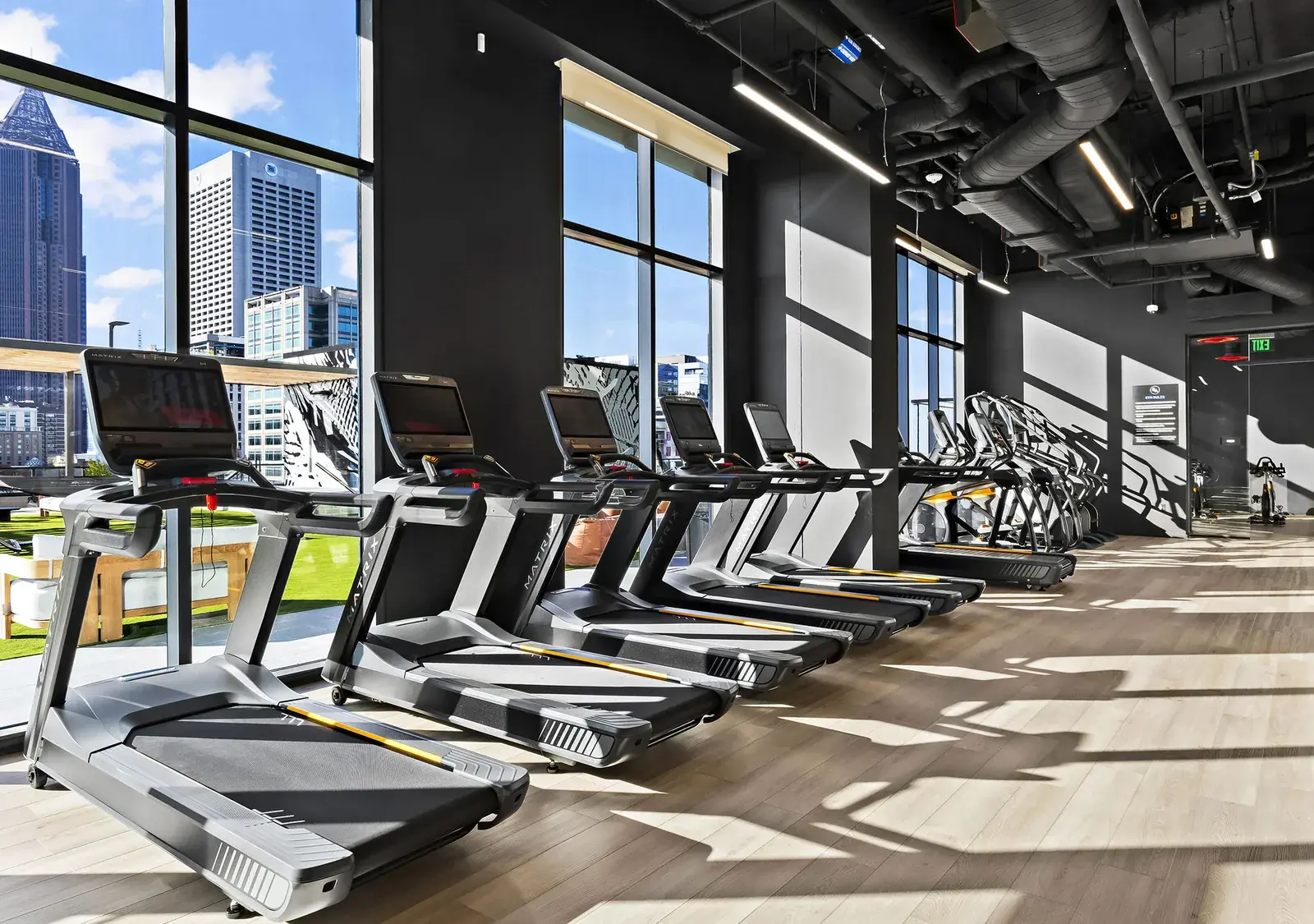
A prospect may first evaluate the fitness amenity through photos, renders or a tour. Overall design, lighting, airflow, acoustics, ceiling height, spacing, temperature and layout all influence whether the room feels current and inviting.
A room may fall short if it feels dark, crowded, poorly ventilated, visually inconsistent or difficult to move through. A stronger room feels bright, comfortable, cohesive and easy to understand at a glance. When comparing properties, the question is not only which rooms look better in photos. It is which room creates the stronger impression when a prospect imagines actually using it.
Assessment Questions
- In photos, rendering or a tour, which fitness room creates the stronger first impression?
- Does the room feel bright, clean, comfortable and current?
- Does the spacing make the room feel usable rather than crowded?
- Do finishes, lighting, mirrors, flooring and equipment look cohesive?
- If you’re touring the property, do airflow, acoustics and temperature support a comfortable workout environment?
- Compared to the nearby property, which room would a prospect be more likely to remember after the tour?
Residents Can Complete the Types of Workouts They Already Know and Use
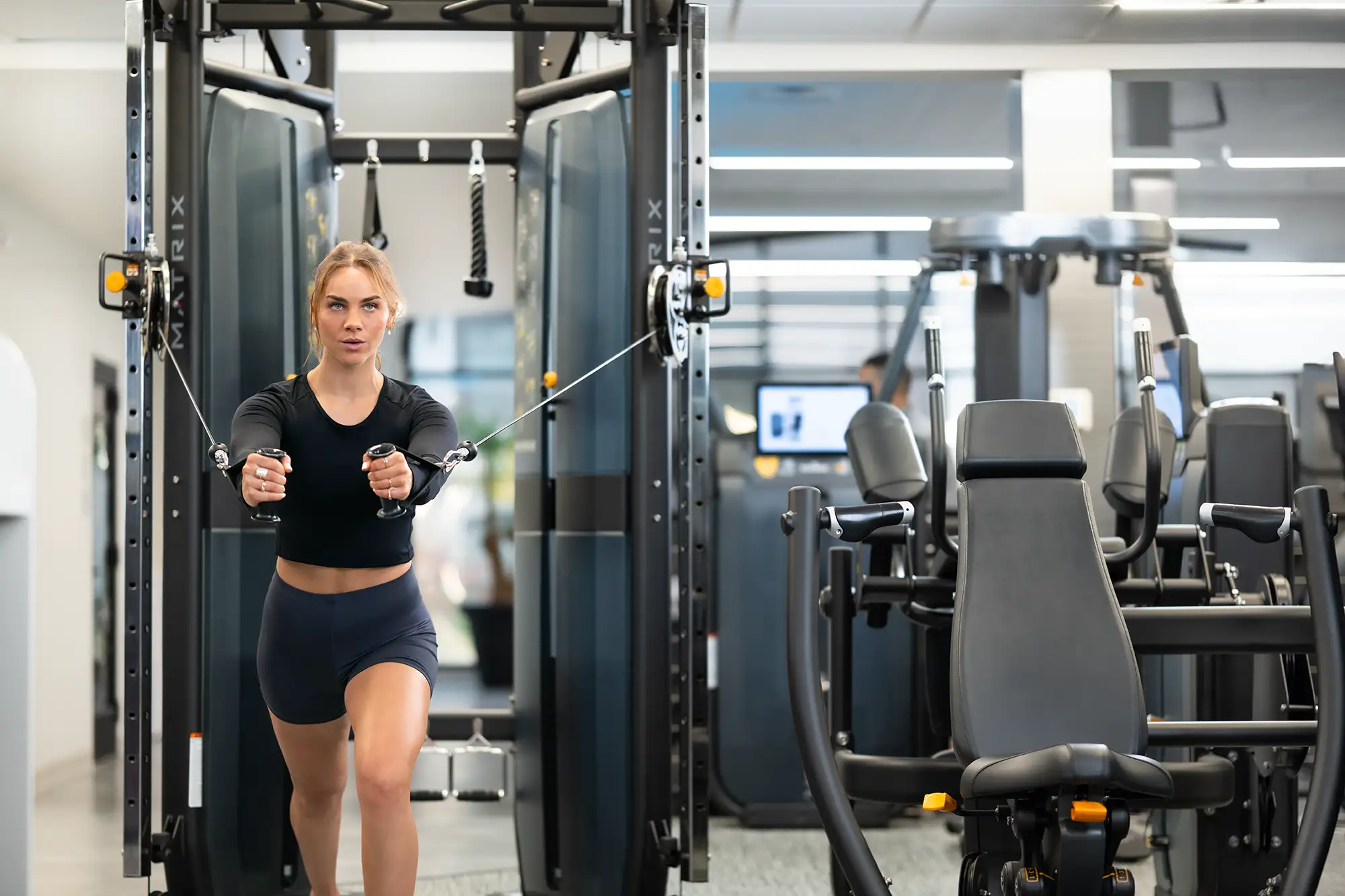
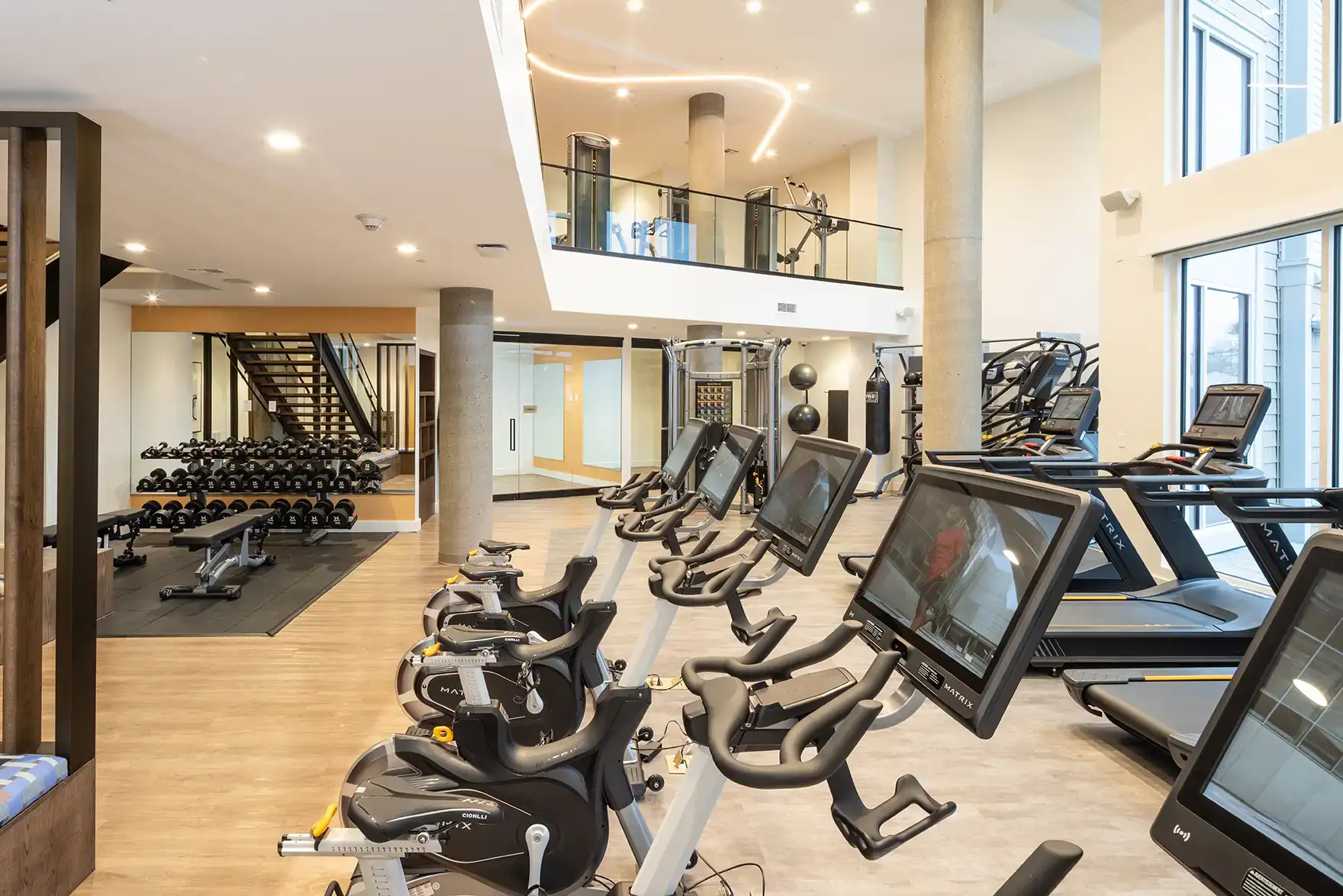
Every fitness amenity should provide strong training coverage in the four core training experiences: cardio, strength, functional training and mobility/recovery. The goal is not to match a nearby competitor piece for piece. It is to understand where each fitness amenity provides strong training coverage and where gaps exist.
A room that supports all four areas well gives residents more ways to complete a familiar workout without leaving the property. A room that underinvests in one area may still look complete, but it may not support how residents actually train.
Assessment Questions
- Does the room support cardio, strength, functional training, and mobility/ recovery?
- Is the balance among those experiences appropriate for the residents this property is designed to attract?
- Does the strength offering provide enough range for different ability levels?
- Are any training experiences noticeably stronger or weaker than those offered by competing properties?
- Can multiple residents use the space for different types of workouts without creating unnecessary conflicts?
The Space Feels Easy to Understand and Use
A fitness amenity can offer a broad range of training options and still feel unfamiliar if the equipment, layout or interfaces are difficult to understand. Residents of any experience level should be able to enter the space and quickly recognize how to use it.
This matters in a competitive comparison because a prospect may judge the room quickly. Familiar equipment, consistent console experiences, clear zones and intuitive flow can make one amenity feel more approachable than another, even if the equipment count is similar.
Assessment Questions
- Can residents quickly understand how the room is organized?
- Are the equipment types recognizable and approachable across a range of fitness experience levels?
- Are equipment interfaces and controls intuitive and reasonably consistent?
- Is it clear where cardio, strength, functional training and mobility/recovery activities happen?
- Can residents move comfortably between equipment and training areas?
Beyond the Basics: Standing Out from Competitors
Once the essentials are in place, the next question is how your fitness amenity could stand out from others in your market.
The Room Feels Current
Shifts in how people train can change what residents expect from a fitness amenity. The American College of Sports Medicine’s 2026 fitness trends provide one useful indicator of where exercise behavior and expectations are moving.
ACSM 2026 Fitness Trends
|
Strength training is one example of how broader fitness trends can change what residents expect. About one in three Americans now strength trains regularly, according to The New York Times. Equipment for heavier lifting, such as plate-loaded leg presses and Olympic lifting stations, once seemed unusual in multifamily properties. It is now more likely to appear, especially at A/A+ properties.
For developers and operators, the question is not whether every trend requires a new piece of equipment. It is whether the fitness amenity reflects how residents are training today. Open floor space can support balance, core, mobility work and app-guided workouts. A stronger strength offering can accommodate residents with different goals and ability levels. Connected equipment may add value for residents already using wearables and mobile fitness apps.
When comparing properties, consider whether one room feels more current and relevant than another, not simply whether it has more equipment.
Assessment Questions
- Does the room reflect current resident training expectations?
- Does it support cardio, strength, functional training and mobility/recovery in a way that feels relevant to the property’s residents?
- Does the room provide enough flexibility for app-guided, wearable-supported or independent workouts?
- How does the room compare with nearby properties, gyms, and studios residents may already know?
What Sets Your Room Apart?
Two nearby properties can serve the same residents and both do it well. Differentiation does not require a different category of equipment. It can mean a stronger version of what comparable properties already offer: a better strength experience, a more intuitive layout, more open floor for functional and mobility work, a higher trim level, stronger technology or a room that feels more aligned with the property’s positioning.
Before committing to a distinctive feature, consider who at the property would use it, how often and what the space would otherwise hold.
Assessment Questions
- Where does your fitness amenity offer more than comparable properties?
- Where does a competing property provide an experience this one does not?
- Are those differences important to the residents you are trying to attract?
- What resident need does each distinctive feature serve?
The Core Question to Answer
What is the strongest reason a prospect would prefer your fitness amenity over the property down the street?
The answer should be more meaningful than having more equipment or more features. It might be a strength offering better suited to your residents, a layout that supports more ways to train, or a fitness experience that better reflects your market.
If you cannot identify a meaningful difference, that is valuable information, too.
Next Steps
An internal design review can surface gaps. An experienced equipment partner can add perspective from projects across property types and markets.
Matrix Fitness works with developers, owners and design teams across affordable, market-rate and A/A+ multifamily properties. That work can include layout review, equipment planning and trim level selection to fit the budget a project actually has.
Breadth across product lines, trim levels and console options makes it possible to meet a budget with the least possible sacrifice, reducing your risk instead of simply reducing your invoice.
Talk to us before you finalize the designs on your next project to get the most out of your investment.